Every restaurant software company is selling AI right now.
AI that writes your emails. AI that picks which customers get a coupon. AI that decides when to send a text and how big the discount should be. The pitch is simple: turn it on, and it fills your restaurant while you focus on the kitchen.
That sounds great when you are short-staffed on a Friday night. But before you hand your marketing to AI, it is worth knowing what it is actually doing with your customers and your margins.
What AI marketing for restaurants actually does
Most AI marketing tools do some mix of three things:
Write the message. Email subject lines, texts, social posts.
Pick who gets it. The software decides which customers to target.
Pick the offer. The software decides whether to send a discount, and how big.
The first one is useful. The last two are where you start giving up control of your business.
What AI is genuinely good at
AI is a good writing assistant. It can give you a first draft of an email when you are staring at a blank screen, clean up menu descriptions, or toss out ideas for a slow-night special.
In all of those, you still look at it and decide. That is the important part.
Where letting AI do it all goes wrong
When software is judged on how many orders it brings in, the easiest lever it has is a discount. A coupon almost always gets more people to order, so AI that is trying to show results leans on coupons.
The problem is who ends up using them. Your regular who orders every Thursday gets 20% off, orders on Thursday like always, and the software counts it as a win. You did not gain an order. You gave away margin on one you already had.
And often you cannot even see it happening. Ask yourself:
Do you know what offer went to which customer last week?
Can you cap how big a discount can be?
Can you stop it from discounting people who order every week anyway?
If the answer is no, the AI is running your marketing, with your money.
What you actually want is automation
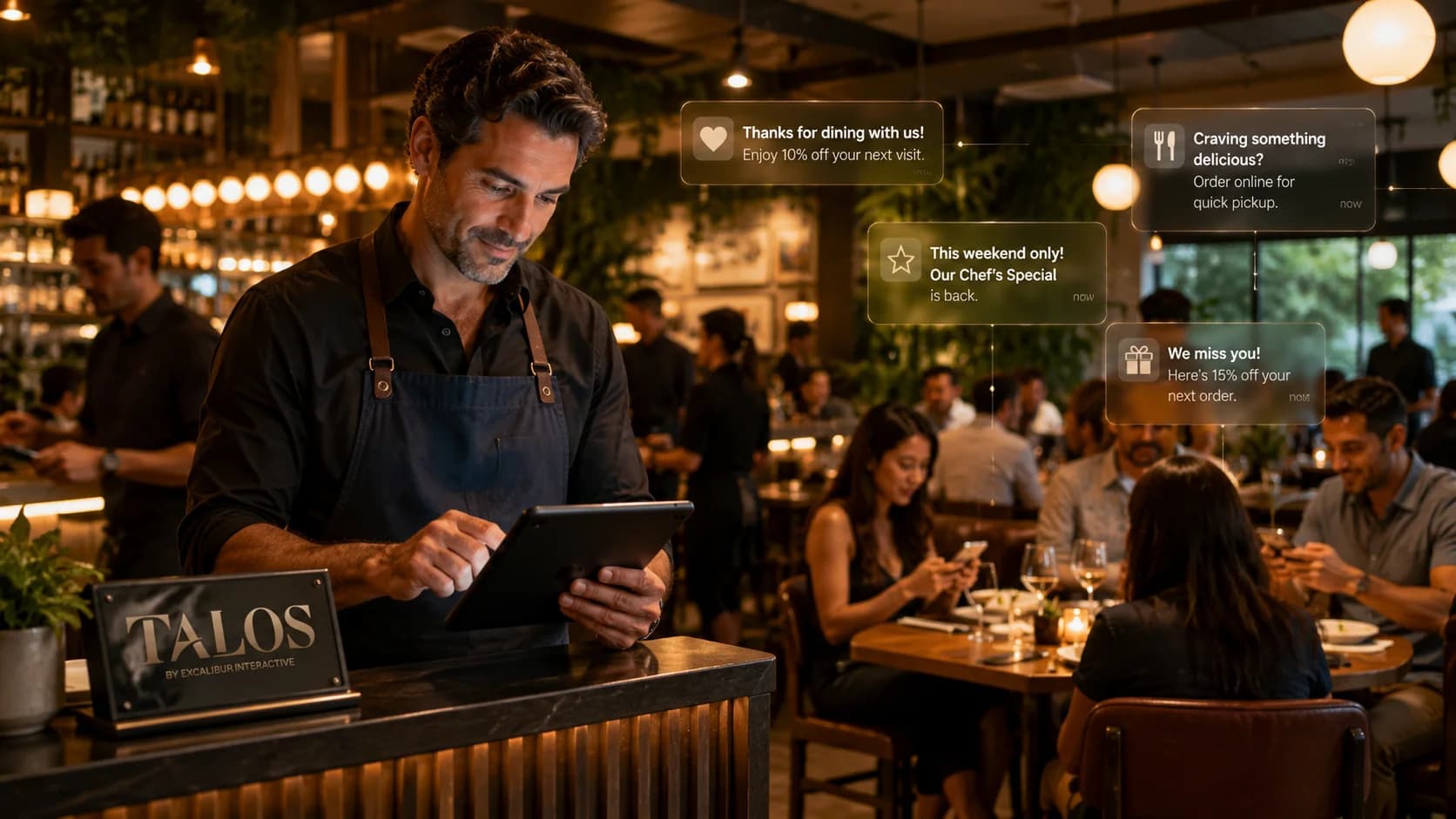
When most owners say they want AI marketing, what they really want is to stop doing marketing by hand. They want it to happen every day without them.
That is automation, and it does not need AI to make the decisions.
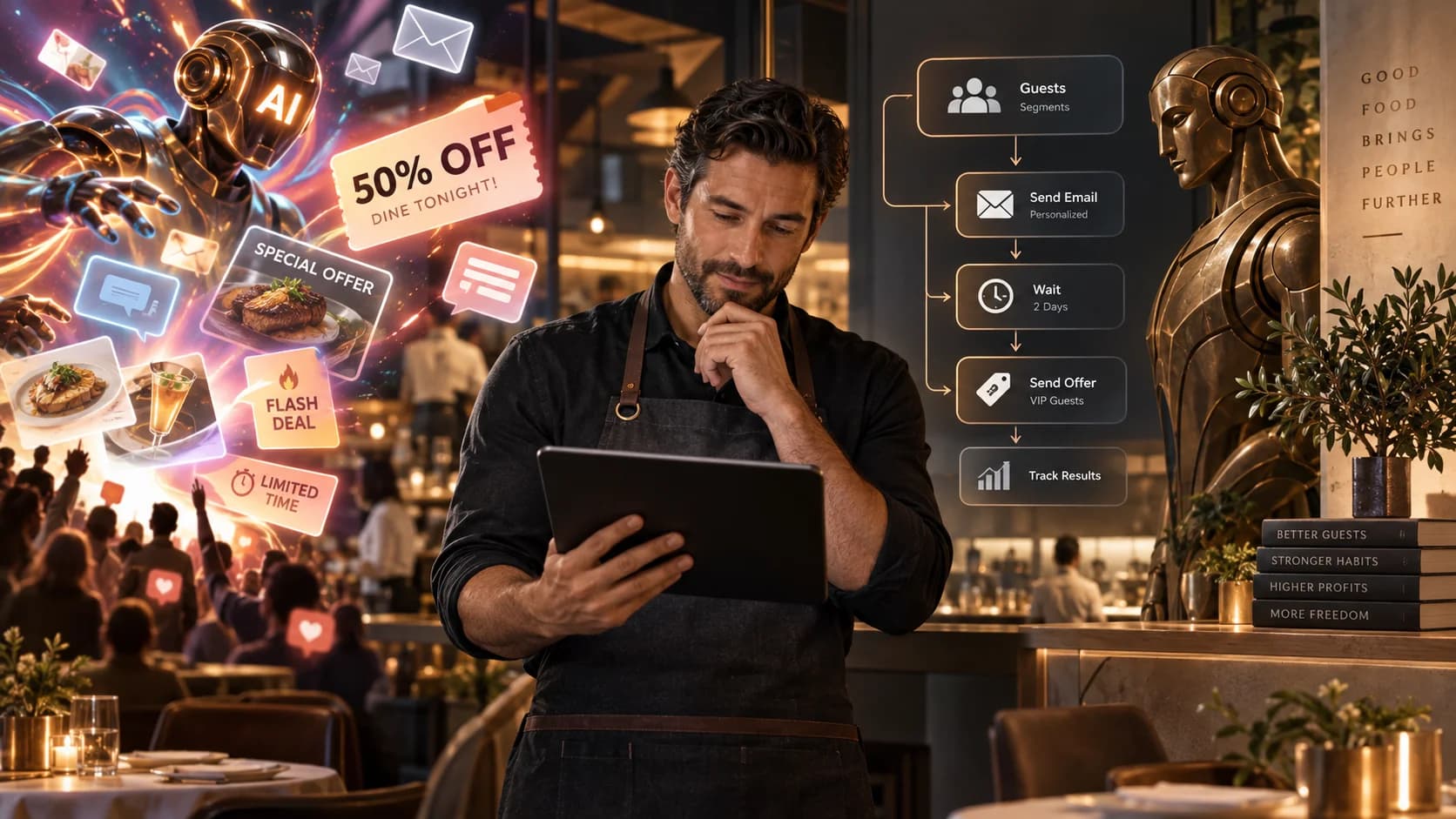
Automation follows rules you set. A customer has not ordered in two weeks? They get the offer you chose. It is their birthday? They get a message and a treat. Someone started an order and did not finish? They get a reminder. A first-time customer gets a follow-up a few days later with a reason to come back.
You decide the timing, the message, and the offer once. Then it runs for every customer, every day, whether you are on the line or home asleep. It never sends a discount you did not approve, and it never touches the regular who ordered yesterday unless you tell it to.
Why Talos chose control over AI
When we built Talos, we had to decide how much to let AI run. We chose to keep the owner in control.
Talos uses AI where it saves you time without making business decisions, like helping you update your menu. But your marketing runs on rules you set, not on choices an algorithm makes for you.
The reason is simple. You know which items have room for a discount and which do not. You know your slow nights and your packed ones. You know your regulars. An AI tool replaces that knowledge with a guess and spends your margin to test it. Automation puts your knowledge to work every day.
That is also where the name comes from. In Greek mythology, Talos was a giant bronze automaton built to guard the island of Crete. He circled the island three times a day, every day, protecting it. He was not there to make his own decisions. He was there to do the job he was built for, and he never stopped.
That is what we wanted to build for restaurants: a system that does exactly what you set it up to do, for every customer, every day, without you having to watch over it. Your customers, your offers, your margins. Talos just keeps working for you.
Questions to ask before you sign up for an AI marketing tool
Who decides the size of the discount, me or the software?
Can I set my own rules instead?
Can I see every message and offer that goes out?
Will it send coupons to customers who order regularly anyway?
If I leave, do I keep my customer list?
The bottom line
AI can save you time on writing. It should not be deciding who gets your discounts.
The marketing that brings customers back is not clever. It is consistent, it runs without you, and it follows your rules. That is what Talos is built to do.